Unlikely Hero Comes On Four Paws
MOREHEAD CITY — A partially paralyzed, blind dog may not fit the traditional definition of a hero, but in Ann Carpenter’s eyes, Bella is that and more.
That’s why Ms. Carpenter has entered her 11-year-old Boston terrier/pug mix, a certified therapy dog, in the 2020 American Humane Hero Dog Awards.
Bella is competing against 360 other canines in the therapy dog category of the 10th annual competition, sponsored by the Lois Pope LIFE Foundation.
Bella, a dog Ms. Carpenter adopted in 2018 from the local animal rescue group Misplaced Mutts, was paralyzed in the rear legs during a previous accident. She has been equipped with a special stroller that allows her to remain mobile.
Despite being paralyzed and partially blind, Bella was certified as a therapy dog through Love on a Leash in February. So far she has visited area nursing homes and the Autism Society of N.C. in Morehead City.
“I think her story inspires people,” Ms. Carpenter said Thursday. “She helps people realize it’s OK to be different and you can do anything despite the obstacles.”
Ms. Carpenter, who has been diagnosed with autism, believes in Bella’s story so much she self-published a children’s book about her dog, Bella the Wonder Dog.
“Bella does not let her disability define or limit her and I wrote the book to encourage children to embrace their differences,” Ms. Carpenter said. “She has taught me so much and has helped calm me and helped me remain grounded. I guess you could say we both know how to persevere.”
To that end, Ms. Carpenter decided to enter Bella in the therapy dog category of the competition, which involves people voting for their favorite dog in one of seven categories. The goal of the event is to identify and honor America’s bravest canine heroes and their owners and culminates in the fall with the “American Humane Hero Dog Awards” on Hallmark Channel.
The two-hour special, now in its 10th year, is broadcast in conjunction with the network’s pet adoption advocacy initiative, Hallmark Channel’s Adoption Ever After, which aims to empty animal shelters and end the country’s homeless pet epidemic, according to the organization’s website.
Top dogs will be selected in seven categories for 2020: therapy dogs, law enforcement dogs, military dogs, service dogs, shelter dogs, search and rescue dogs and guide/hearing dogs.
The nomination period for 2020 closed March 10, and the voting period has begun. First round voting began April 2 and continues through Thursday, May 7. Votes can be cast daily at hero dog awards.org.
The top three semifinalists in each category will advance to the second round of voting, which takes place Thursday, May 28-Thursday, July 16, when the field is narrowed to the top dog in each category. Then, a final overall winner is selected by voting from Thursday, July 30-Thursday, Sept. 10. The winners in each category and the overall winner will be recognized during the 2020 American Hero Dog show in September.
A Day In The Life of Luis: A Way To Gain Distraction
Watching New York governor holding his news conference, he mentioned people are suffering from depression.
People are resorting to “hitting the bottle,” rising in numbers, as far as numbers of what people are doing under these times of quarantine.
There are many ways one can distract themselves from the realization that the Corona will be around for the foreseeable future.
Go to the garage and dust off those weight sets.
Take a lap or two (with a mask on, of course) around the block surrounding your house.
Remember the ruined basketball hoop above your garage? Remember the basketball that has not seen the light in forever stuck in the backyard?
Well now is a little perfect time to make use of them and justify paying for them in the first place.
Make use of petting your dog as a sort of “therapy.“
I’ve known that simply watching their movements whenever they are “free” in the backyard to be a sort of way to get that distraction that is so needed.
I know that this small poodle might not be the best “service dog” but seeing my brother’s dog Duramaxx (Yes, as in the engine in his truck) rummaging through the recycling bin or him biting the hell out of sandals making them fit for the trash cans can be frustrating.
But then you know that you can’t be mad at him for too long because once you hear him playing with his squeaky toy, it brings an automatic smile to your face.
As soon as that toy is played with, all is forgotten.
Only petting him here and there due to other reasons such as him breaking glasses right off the face and his bite cuts deep if you try to resist.
This little dog sure lives up to the name “Maxx” in every way imaginable.
When it comes to his bite, you have to “play dead” like you do with a bear in the forest to lose his interest before he finds something else to be distracted with.
But at the end of the day, he is a welcomed distraction from the realities of daily life.
That goes for both before and after the pandemic.
The little guy weighs all of 5 pounds but he has the demeanor of a 300+ pound
Silverback gorilla.
Only one difference between Maxx and the Silverback:
This guy loves his belly rubs like nobody’s business.
Who Let The Dogs Out?
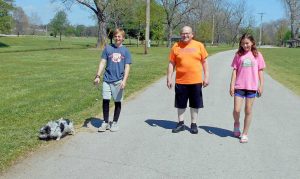
Davidson, left, took his humans Maverick Grimsby, holding leash, Jon Carder and Savanna Haselwood, out for a stroll at Pierce City’s South Park on Thursday afternoon. The group enjoyed getting out of the house and taking in the refreshing breeze and warm rays on a sunny afternoon. Melonie Roberts/reporter@monett-times.com
NYC Pet Hotline Launched As Two New York Cats Test Positive for COVID-19
Following recent reports by the CDC that two pet cats in New York State contracted the novel coronavirus, pet owners around the City may have become concerned that their own pets may get infected. However, they can now call a new Pet Hotline which will serve as an information, planning, referral and service coordination hub for New York City pet owners.
On Apr. 29, the City’s emergency management department and the Mayor’s Office of Animal Welfare announced the launch of the NYC COVID-19 Pet Hotline for those who need support for their pets during the COVID-19 pandemic.
“Pets and service animals are a part of our family, and we want to alleviate any concern associated with having to take care of these family members during these trying times,” said NYC Emergency Management Commissioner Deanne Criswell. “We are thankful to our task force members who have stepped up to help New Yorkers who need this service.”
The NYC Pet Hotline responders will answer questions and help address pet owners’ concerns about how to keep their pets safe during the COVID-19 crisis. The team will also connect callers to pet relief resources such as subsidized emergency veterinary care and food and supply distribution services.
On Apr. 22, the CDC and the U.S. Department of Agriculture’s (USDA) National Veterinary Services Laboratories (NVSL) announced the first confirmed cases of COVID-19 infection in two pet cats, the first pets in the United States to test positive for the virus.
Norwood News reported on Apr. 6 that a tiger at Bronx Zoo had already tested positive for the novel coronavirus, and following an investigation, National Geographic later reported that about a week later, four more tigers and three lions at Bronx Zoo tested positive as well.
The two infected pet cats live in two separate areas of the State. Both have mild respiratory illness and are expected to make a full recovery. Coronavirus infections have been reported in very few animals worldwide, mostly in those that had close contact with a person with COVID-19. In late March, it was reported that a cat in Belgium had also tested positive.
In a joint statement with CDC, USDA wrote that routine testing of animals is not recommended at this time, and that if other animals are confirmed positive for the novel coronavirus in the United States, USDA will update its register of confirmed animal cases.
In the statement, the two federal agencies also wrote that state animal health and public health officials would take the lead in making determinations about whether animals should be tested for the virus.
The agencies wrote that a veterinarian tested the first cat after it showed mild respiratory signs. No individuals in the household were confirmed to be ill with COVID-19. “The virus may have been transmitted to the cat by mildly ill or asymptomatic household members, or through contact with an infected person outside its home,” the statement read.
They said samples from the second cat were taken after it showed signs of respiratory illness and it transpired that the owner of the cat had tested positive for COVID-19 prior to the cat showing any symptoms. “Another cat in the household has shown no signs of illness,” the statement read.
The agencies wrote that both cats tested “presumptive positive” at a private veterinary laboratory, which reported the results to state and federal officials. The confirmatory testing was conducted at NVSL and included the collection of additional samples.
NVSL serves as an international reference laboratory and provides expertise and guidance on diagnostic techniques, as well as confirmatory testing for foreign and emerging animal diseases. Such testing is required for certain animal diseases in the U.S. in order to comply with national and international reporting procedures.
The World Organization for Animal Health (OIE) considers the coronavirus an emerging disease, and therefore USDA must report confirmed U.S. animal infections to the OIE.
CDC and USDA wrote that public health officials are still learning about the coronavirus, but that there is no evidence so far that pets play a role in spreading it in the United States. As such, the agencies say there is no justification for taking any measures against pets that might compromise their welfare. “Further studies are needed to understand if and how different animals, including pets, could be affected,” their statement read.
Until more information is available, the CDC recommends adhering to the following guidelines:
- Do not let pets interact with people or other animals outside the household.
- Keep cats indoors when possible to prevent them from interacting with other animals or people.
- Walk dogs on a leash, maintaining at least 6 feet from other people and animals.
- Avoid dog parks or public places where a large number of people and dogs gather.
If you are sick with COVID-19 (either suspected or confirmed by a test), restrict contact with your pets and other animals, just like you would around other people.
- When possible, have another member of your household care for your pets while you are sick.
- Avoid contact with your pet, including petting, snuggling, being kissed or licked, and sharing food or bedding.
- If you must care for your pet or be around animals while you are sick, wear a cloth face covering and wash your hands before and after you interact with them.
CDC wrote that while additional animals may test positive as infections continue in people, it is important to note that conducting animal testing does not reduce the availability of tests for humans.
Dr. Paul Calle, Bronx Zoo chief veterinarian, wrote, via Twitter, in early April, “The COVID-19 testing that was performed on our Malayan tiger Nadia was performed in a veterinary school laboratory and is not the same test as is used for people.”
Calle added, “You cannot send human samples to the veterinary laboratory, and you cannot send animal tests to the human laboratories, so there is no competition for testing between these very different situations.”
The CDC also highlights the following key points in relation to COVID-19 and animals:
- We do not know the exact source of the current outbreak of coronavirus disease 2019 (COVID-19), but we know that it originally came from an animal source.
- At this time, there is no evidence that animals play a significant role in spreading the virus that causes COVID-19.
- Based on the limited information available to date, the risk of animals spreading COVID-19 to people is considered to be low.
- We are still learning about this virus, but it appears that it can spread from people to animals in some situations.
The NYC Pet Hotline and supportive services are being provided by the City’s Animal Planning Task Force, which is coordinated by NYC Emergency Management. The Task Force is a collaboration between City agencies and nonprofits.
For New York City residents who own pets requiring a higher level of care, cases will be escalated for coordination of temporary placement or supplemental care of animals.
“This Administration has always understood that animals share our homes, our lives, and are sometimes our closest companions,” said Mayor’s Community Affairs Unit Commissioner Marco A. Carrión. “We must support and plan for all New Yorkers, including four-legged ones, during these times, and we are grateful to all of the animal welfare partners who have stepped up to create the Pet Hotline and provide lifesaving services to animals.”
The NYC Pet Hotline is the first of its kind in the country. The number to call is 1-877-204-8821. Support is available from 8:00 a.m. to 8:00 p.m., seven days a week.
Seattle-Area Pet-service Providers Launch Program Focused On Safety
Just as other businesses have been impacted by the closures mandated by Gov. Jay Inslee in a state-wide effort to reduce COVID-19 closures, so too have Tamara Bean and Cameron Thompson.
While the Seattle-area Fetch! Pet Care franchisees and regional partners normally offer a range of animal services, the pair are now focusing on a specialized program conceived by Bean aimed at serving essential personnel and seniors. The Fetch and Go service is a no-owner contact method of picking up and returning a pet.
Bean said she thought of the Fetch and Go program when coronavirus cases first started to be reported in the area. To minimize risk to both pet sitters and the people they serve, the safety program requires clients to have a sanitation station by their front door. Dog walkers are also carrying their own leashes for dogs, and dog owners are leaving collars and harnesses on their pets. Upon arrival, all dog sitters have to do is put the leash on the dog, leave for a walk, and, when they return, wipe everything they tough with pet-friendly disinfecting products they carry before they leave.
“It takes potentially 20 seconds,” Bean said.
If a client is medical personnel, pet sitters won’t go into their homes until they have been at work for a minimum of three hours. This is another safety measure they’ve implemented in response to the pandemic, Bean said.
“I’d rather us err on the side of safety than otherwise,” she said.
Thompson, whose territory includes Madison Park, agrees the focus is on everyone’s safety.
“We’ve done everything we can except put a bubble around us,” he said.
Bean said, with the closures, 90 percent of their professional pet care services are shut down. They are only accepting new clients if they are senior citizens who are immobile or first responders or medical personnel who need their dogs walked.
She said one of her clients in Ballard has been working the overnight shift, and they have scheduled her dog walker to come between 11 p.m. and 2 a.m.
“We are doing whatever we can to help, even if that means coming in late at night,” Bean said.
The rest of their focus is on their senior clients. Thompson said without their dog-walking services, some of their more elderly clients would not be able to exercise their dogs.
“At the end of the day, we are providing a service that allows them to have their friends and maintain their way of life,” he said.
Pet sitters will also run errands for owners if requested. Recently, a petsitter also took one of his elderly clients’ dogs in to the veterinarian for vaccinations and a quick check up.
“These are things we typically provide, but at this time, they’re even more significant to people,” Thompson said.
He said while his dog sitters will deliver pet supplies to clients upon occasion, because of the pandemic, he has arranged for his dog sitters to take other necessities, as well.
“This is something we want to do to keep our clients happy,” he said. “We’re all in this together during this tragic time.”
Bean said while the business’s focus is making sure clients’ needs are served during this time, the pandemic and resulting closures have personally affected her as a small business owner and single mom. She said she has grown her business into a successful enterprise over the last 13 years.
“It’s been my heart and soul, and it’s devastating in a significant way,” Bean said of the pandemic, adding she can learn and grow from the experience, as well. “So when we do build back up, we can institute everything we have learned.”
Bean also recognizes the importance of communication and positivity during the pandemic, which is why she has created the Raise a Paw to Pets Facebook page.
She said #RaiseAPawToPets is a “community movement to share love and light being generated by pets everywhere.” Bean invites people to join the Facebook group and share funny and thoughtful stories about their pets.
“A pet’s purpose is to share and spread love, so we created this movement to follow their example,” Bean said in an email. “The least we can do is tell their stories.”
Fetch! Pet Care is the nation’s largest provider of professional dog walking and pet sitting services. All dog walkers and pet sitters are trained, bonded, insured and background checked and personally matched with clients to meet their specific needs, according to a press release. For more information, find Fetch!
Pet Groomers, Retailers Go Contactless To Do Business During COVID-19
Carol Nihanu and her service dog Hoku are regulars at Live Love Pet in Kaimuki.
Before reopening, shop owner Krystal Hensley made changes she hopes protects both her clients and employees.
“She paid a lot of attention to detail and the safety of the animals as well as the owners,” Nihanu said. “I like that and I appreciate that.”
Hensley’s testing a contactless system where clients don’t come into the shop to drop off their pets. She also installed new kennels and increased spacing between grooming areas.
Under the state’s stay-at-home order, businesses critical to pet health are considered essential, but Hensley says she called the Mayor’s office and the city hotline and was told pet grooming services are not essential. KITV-4 reached out to the Mayor’s Office but have not heard back.
Hensley said she wanted to follow the law and closed her store, but was upset to see other local pet salons remain open and big chains like Petco and PetSmart continue their grooming services. She and Nihanu believe it put the public at risk during the early days of the pandemic. But now they say it’s time to reopen.
“We need to get back to doing what we love. People don’t see their dog as a dog but as their child, by not letting them get their dog groomed, you’re taking away their ability to cope,” Hensley said. “A lot of people see dog grooming as a novelty or something that only the rich can afford, it’s not true at all, because the health of your baby is most important.”
For Nihanu, the service is essential.
“I have really bad arthritis. I can’t bend my knees. So I can’t even put him in a tub to bathe him. I have arthritis in my shoulders. So if I didn’t have a groomer that was reliable, I would not be able to care for him as he needs to be cared for,” she said.
One-on-one interactions in retail settings will be harder, but some local shops are adjusting. Simply Organized in Kahala Mall, for example, is offering a “Buy Online, Pick Up at Store” service. Customers can buy products at simplyorganizedhi.com and pick up at the store Monday through Saturday from 11 a.m. to 3 p.m. Customers can also call the store at 739-7007 to make requests for items they don’t see online.
Doing business without contact might seem counter-intuitive and strange in Hawaii where touching is as common as breathing, but it’s what companies are doing to protect the community once the economy reopens.
Pet Workers Wonder Why They Get lumped In With Human Personal-Care Services
Some dog groomers are scratching their noggins wondering how they got lumped in with salons, barbershops and tattoo parlors in business restrictions designed to slow the spread of COVID-19.
“I have no idea why they decided to restrict dog groomers. I can understand human grooming – you’re working around the face, that’s different. But dog grooming? There’s not much difference between hauling a bag of dog food to someone’s car or picking up their dog,” said LeeAnn Craig, owner of Healthy Hounds & Fat Cats in Durango.
Craig estimates the pet service segment of her business, which includes pet boarding, doggie day care and a self-service dog wash, is down 90% since restrictions on commerce were put on place to slow the spread of the novel coronavirus.
Lou Galinson, owner of Pet Haus in Durango, said it would have been nice to have opened his grooming service sooner than May 8, the opening date allowed under San Juan Basin Public Health’s Safer La Plata order.
“There’s not a whole lot of interaction going on with people when you’re grooming a dog,” he said.
As an essential business, the retail operations at Pet Haus and Healthy Hounds & Fat Cats have been allowed to remain open during COVID-19 restrictions. But both Craig and Galinson had to close their grooming services, and they said allowance for their continued operation would have been helpful in these economically stressful times.
“We would have picked up dogs. We absolutely could have taken steps to limit interactions with people,” Galinson said, if he would have been allowed to operate his dog grooming service.
Craig said differing dates in public orders on when dog groomers would be allowed to resume service have caused some chaos with her scheduling.
When Gov. Jared Polis announced his safer-at-home policy, which allowed groomers to begin serving pet owners on May 1, she began scheduling appointments. But a few days later, San Juan Basin Public Health issued its Safer La Plata order, superseding the governor’s order and keeping the lid on dog grooming until May 8.
“We had to call 60 different dog owners to reschedule,” Craig said. “We had to pester customers a couple times at home, but they’re understanding, so that’s been nice.”
Claire Ninde, spokeswoman for the health department, said the agency did not categorize nonessential businesses based on their risk to spread COVID-19 (among humans) and made no distinction between barbers, hair stylists, tattoo artists or dog groomers.
SJBPH used the governor’s and Colorado Department of Public Health and Environment’s categories and guidance and simply extended out the dates for opening of specific businesses from May 1 and May 4 in Polis’ order to May 8 in SJBPH’s order.
Craig also took umbrage at dog grooming being relegated to nonessential status in the COVID-19 era.
“It can be a health issue,” she said, “Some dogs can get skin conditions if they are not groomed regularly.”
Pet Groomers Reopen In Montezuma County
After Colorado lifted restrictions, pet grooming businesses reopened in Montezuma County and are booked with customers needing a trim.
At Cortez Animal Bed and Breakfast, owner Kelly Spruell said her regulars are coming back in to board and groom their pets.
“The phone’s been ringing off the hook, and the appointment book is filling up,” she said.
The staff is following Colorado’s COVID-19 prevention guidelines, including wearing masks, disinfecting surfaces, hand-washing, and instructing customers to stay 6 feet apart. Groomers will be pampering eight to 10 pets per day.
“They’re coming in a little shaggy. We’re excited to reopen and get them looking their best,” Spruell said.
As an animal care facility, the boarding portion of Cortez Animal B&B was considered an essential business and was able to stay open under the previous stay-at-home order issued by Colorado.
However, because of travel restrictions, nobody was boarding, and Spruell took a big hit to the mainstay of her business, she said.
Normally, March and April is a busy time as she boards up to 80 pets for people on spring break. But this year, she had just a few because nobody was traveling. Boardings are starting to rebound.
The monthlong forced closure was “tough for business, but also rewarding,” Spruell said, because they were able to do some renovations, painting and deep cleaning. Being awarded the Paycheck Protection Program was a relief, and she kept her staff working on renovations.
In Dolores, Mudpuppies Pawshoppe also reopened, said owner Molly Wolf, and is booked solid for grooming, with a waiting list of 90 clients. Staff have been rehired.
Wolf has implemented precautions to protect against the spread of COVID-19.
To ensure 6-foot distancing, a fenced entrance was installed where customers drop off their pets, return to their car and honk. Only the animal is allowed indoors for the grooming. Payments are dropped off at an outdoor station.
Staff wear masks and regularly disinfect areas, and pets are first bathed before grooming.
The shutdown hurt her business, Wolf said, but it was also “a good break. We got a lot of projects done, did a lot of cleaning. We’re very happy to back working.”
Regarding their views about the state restrictions during the pandemic, both pet business owners said they did not want to comment because the issue is too controversial.
In La Plata County, the San Juan Basin Health Department elected to be more restrictive than the state and delayed the opening of pet grooming facilities until May 8.
And dog groomers were scratching their heads wondering how they got lumped in with salons, barbershops and tattoo parlors in business restrictions designed to slow the spread of COVID-19.
“I have no idea why they decided to restrict dog groomers. I can understand human grooming – you’re working around the face, that’s different. But dog grooming? There’s not much difference between hauling a bag of dog food to someone’s car or picking up their dog,” said LeeAnn Craig, owner of Healthy Hounds & Fat Cats in Durango.
Craig estimates the pet service segment of her business, which includes pet boarding, doggie day care and a self-service dog wash, is down 90% since restrictions on commerce were put on place to slow the spread of the novel coronavirus.
Lou Galinson, owner of Pet Haus in Durango, said it would have been nice to have opened his grooming service sooner than May 8, the opening date allowed under San Juan Basin Public Health’s Safer La Plata order.
“There’s not a whole lot of interaction going on with people when you’re grooming a dog,” he said.
As an essential business, the retail operations at Pet Haus and Healthy Hounds & Fat Cats have been allowed to remain open during COVID-19 restrictions. But both Craig and Galinson had to close their grooming services, and they said allowance for their continued operation would have been helpful in these economically stressful times.
“We would have picked up dogs. We absolutely could have taken steps to limit interactions with people,” Galinson said, if he would have been allowed to operate his dog grooming service.
Claire Ninde, spokeswoman for the health department, said the agency did not categorize nonessential businesses based on their risk to spread COVID-19 (among humans) and made no distinction between barbers, hair stylists, tattoo artists or dog groomers.
SJBPH used the governor’s and Colorado Department of Public Health and Environment’s categories and guidance and simply extended out the dates for opening of specific businesses from May 1 and May 4 in Polis’ order to May 8 in SJBPH’s order.
Dogs Are Having Their Day
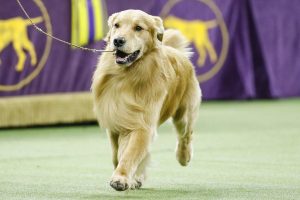
In this Feb. 11, 2020 photo, a Golden retriever named Daniel competes in the Best in Show contest during 144th Westminster Kennel Club dog show in New York. America’s dogs are having their day as the coronavirus keeps many people at home more with their pets and is spurring so much adoption and fostering that some shelters’ kennels have emptied.
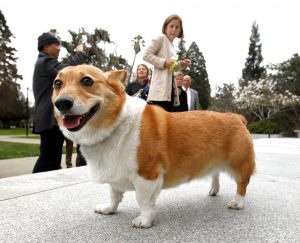
FILE – In this Feb. 15, 2011 file photo, Sutter, a Pembroke Welsh corgi belonging to California Gov. Jerry Brown, and California first lady Anne Gust Brown, background, walks around the east steps of the Capitol in Sacramento, Calif. America’s dogs are having their day as the coronavirus keeps many people at home more with their pets and is spurring so much adoption and fostering that some shelters’ kennels have emptied. But while much is changing for people and pooches around the U.S., there’s at least one thing holding as steady as a dog with a favorite toy. (AP Photo/Rich Pedroncelli, File)
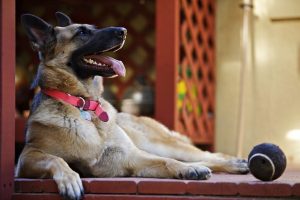
FILE- In this Jan. 12, 2010 file photo, “Kelli,” a two-year-old German Shepard that belongs to US Army member Matthew Snider, rests after playing ball. America’s dogs are having their day as the coronavirus keeps many people at home more with their pets and is spurring so much adoption and fostering that some shelters’ kennels have emptied. (AP Photo/Damian Dovarganes, File)
By: Damian Dovarganes
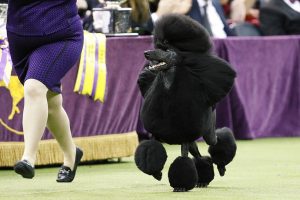
FILE- In this Feb. 11, 2020 file photo, a standard poodle named Siba, competes for Best in Show during the 144th Westminster Kennel Club dog show in New York. America’s dogs are having their day as the coronavirus keeps many people at home more with their pets and is spurring so much adoption and fostering that some shelters’ kennels have emptied. (AP Photo/John Minchillo, File)
By: John Minchillo
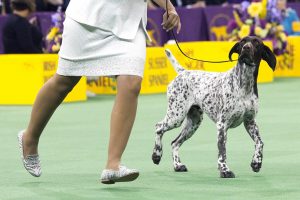
FILE- In this Feb. 16, 2016 file photo, C.J., a German shorthaired pointer, is shown in the ring during the sporting group competition at the 140th Westminster Kennel Club dog show in New York. C.J. won best in Sporting group. The American Kennel Club says that German shorthaired pointer’s are the ninth most popular dog breed of 2019. (AP Photo/Mary Altaffer, File)
By: Mary Altaffer
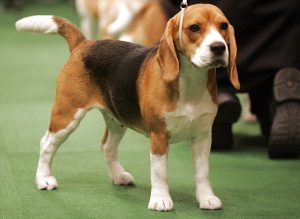
FILE- In this Feb. 14, 2011 file photo, a Beagle waits to be judged during the first day of the Westminster Dog Show in New York. America’s dogs are having their day as the coronavirus keeps many people at home more with their pets and is spurring so much adoption and fostering that some shelters’ kennels have emptied. (AP Photo/Jeff Christensen, File)
By: Jeff Christensen
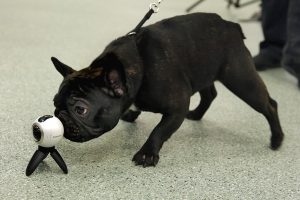
FILE- In this March 21, 2017 file photo a French bulldog named Violet inspects a virtual reality camera in New York. America’s dogs are having their day as the coronavirus keeps many people at home more with their pets and is spurring so much adoption and fostering that some shelters’ kennels have emptied. (AP Photo/Richard Drew, File)
By: Richard Drew
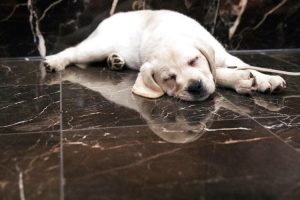
FILE- In this March 28, 2018, file photo, Harbor, an 8-week old Labrador retriever, takes a nap during a news conference at the American Kennel Club headquarters in New York. America’s dogs are having their day as the coronavirus keeps many people at home more with their pets and is spurring so much adoption and fostering that some shelters’ kennels have emptied. (AP Photo/Mary Altaffer, File)
By: Mary Altaffer
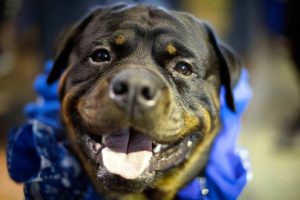
FILE- In this Feb. 11, 2017 file photo, a Rottweiler named Prime, who works as a service dog, is seen during the meet the breeds companion event to the Westminster Kennel Club Dog Show in New York. America’s dogs are having their day as the coronavirus keeps many people at home more with their pets and is spurring so much adoption and fostering that some shelters’ kennels have emptied. (AP Photo/Mary Altaffer, File)
By: Mary Altaffer
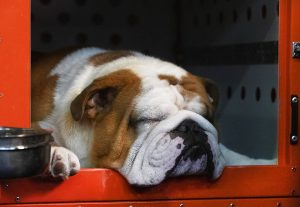
In this Feb. 10, 2020 file photo, a bulldog named Thor naps before competition at the 144th Westminster Kennel Club dog show in New York. America’s dogs are having their day as the coronavirus keeps many people at home more with their pets and is spurring so much adoption and fostering that some shelters’ kennels have emptied. (AP Photo/Mark Lennihan, File)
By: Mark Lennihan
Peterborough Police Dog Chase Locates Cocaine In Vehicle During Traffic Stop
A Peterborough woman is facing drug-related charges following a traffic stop in which Police Service Dog Chase located cocaine inside the vehicle on Tuesday morning.
According to the Peterborough Police Service, an officer on patrol in the area of Charlotte and Rubidge streets conducted a traffic stop around 9:20 a.m. that morning, after observing a vehicle failing to stop properly at a traffic light.
Police discovered the driver was currently under suspension from driving.
The canine unit also attended the scene. Chase searched the vehicle and indicated there were drugs in the area of the driver’s seat, according to police.
Officers searched and located cocaine allegedly concealed beside the driver’s seat.
Lindsay Ann Musgrave, 40, of Stormont Street, Peterborough, was arrested and charged with possession of a Schedule I substance – cocaine; driving while under suspension and improper Stop – traffic signal at intersection.